
Shared Collections: Strengthening Conservation in India
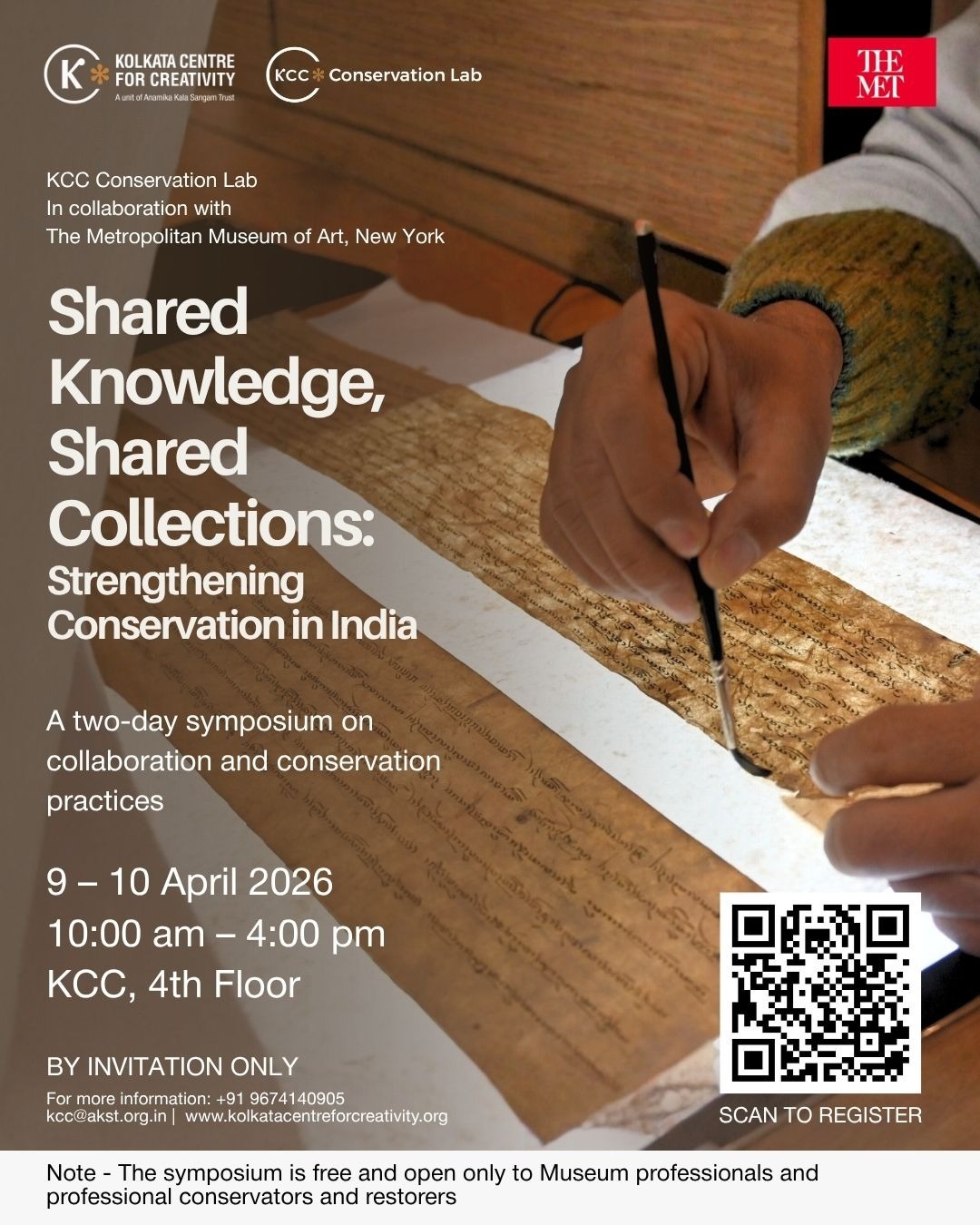
Shared Knowledge, Shared Collections:
Strengthening Conservation in India
A Two-Day Symposium 9–10 April 2026 | Kolkata Centre for Creativity, Kolkata Jointly organised by KCC Conservation Lab (KCCCL), Kolkata Centre for Creativity
&
The Metropolitan Museum of Art, New York
Cultural heritage conservation has emerged as a critical field in safeguarding the artistic, historical, and material legacy of societies across the world. In a country as culturally diverse as India which is home to a vast range of archaeological objects, artworks, manuscripts, textiles, and living traditions, the need for trained conservation professionals, institutional collaboration, and knowledge exchange is particularly urgent. While India possesses an immense repository of heritage collections across museums, archives, temples, and private holdings, the infrastructure for conservation training, research, and professional networking remains limited and unevenly distributed.
International collaborations have increasingly played a crucial role in strengthening conservation capacity by facilitating skill-sharing, training opportunities, and cross-institutional dialogue. Such partnerships create pathways for Indian conservation professionals to engage with global best practices while contributing local knowledge, traditional techniques, and contextual expertise to the international conservation discourse.
Within this landscape, the collaboration between The Metropolitan Museum of Art, New York, and the Kolkata Centre for Creativity Conservation Lab represents an important step toward fostering sustained professional exchange and building a stronger conservation ecosystem in India.
The two-day symposium titled “Shared Knowledge, Shared Collections: Strengthening Conservation in India” Jointly organised by KCC Conservation Lab (KCCCL), Kolkata Centre for Creativity & The Metropolitan Museum of Art, New York, on 9–10 April 2026 builds upon the ongoing engagement between The Met and conservation professionals in India through initiatives such as the Indian Conservation Fellowship Programme. This programme has supported emerging conservators in gaining advanced training and research exposure. Fellows selected under this programme have had the opportunity to engage with the collections, laboratories, and conservation practices at The Met, enabling them to develop new technical expertise and research perspectives that can be applied within the Indian context.
Importance and Objectives
Recognising the importance of strengthening professional networks and sharing knowledge gained through such international fellowships, this symposium, which is being organised for the first time in Kolkata, has been conceived as a platform for dialogue, collaboration, and knowledge dissemination. By bringing together conservators, museum professionals, scholars, and heritage practitioners, the event aims to facilitate meaningful conversations on conservation practices, research, community engagement, and the future of the field in India.
The symposium also aims to create a dynamic platform for knowledge exchange and professional networking among conservation practitioners in India. It seeks to strengthen the visibility and accessibility of conservation as a professional field while encouraging collaborative approaches to the care and preservation of shared cultural heritage.
Key objectives
- Strengthening Professional Networks: Creating a forum where conservators, museum professionals, and heritage practitioners can connect, exchange ideas, and build long-term professional relationships.
- Sharing Knowledge and Experiences: Providing a platform for fellows of the Indian Conservation Fellowship Programme to present their research, reflect on their training experiences, and discuss how they intend to apply these learnings within India.
- Encouraging Collaborative Research: Highlighting interdisciplinary and cross-institutional collaborations that contribute to the advancement of conservation science and practice.
- Supporting Career Development: Addressing opportunities for training, professional development, and employment within the conservation sector.
- Promoting Community Engagement: Exploring ways in which conservation initiatives can engage wider communities and foster public awareness about cultural heritage preservation.
Programme Overview
The two-day symposium will feature keynote addresses by distinguished professionals and leaders in the field of museums and conservation in India, who will speak on themes related to collaborative initiatives, conservation research, community engagement, and emerging opportunities in the discipline.
This will be followed by presentations by fellows of the Indian Conservation Fellowship Programme, supported by The Met. The fellows will share insights from their fellowship experiences, the research projects they undertook during their training, and the ways in which they envision applying their newly acquired knowledge and skills upon returning to India.
On the second day, KCC Conservation Lab (KCCCL) will also present a session introducing the lab and highlighting its work and initiatives.
These sessions will collectively offer an opportunity for participants to reflect on how international training programmes can contribute to strengthening conservation practice within the Indian context.
Closing and Institutional Engagement
The symposium will conclude with a guided tour of the KCC Conservation Lab, offering participants a closer look at the facilities and conservation work being undertaken at the Kolkata Centre for Creativity. The programme will also include visits to the Emami Art galleries and the Emami Legacy Centre, allowing participants to engage directly with the institution’s artistic and archival collections and understand the role of conservation within a broader cultural ecosystem.
Conclusion
“Shared Knowledge, Shared Collections: Strengthening Conservation in India” seeks to reinforce the idea that the preservation of cultural heritage is a collective responsibility that thrives on collaboration, shared learning, and sustained professional engagement. By bringing together institutions such as The Metropolitan Museum of Art and the Kolkata Centre for Creativity, the symposium aims to strengthen networks within the conservation community and support the continued growth of conservation practice in India.
